

Farmers don’t only produce food. We also produce sustainability. You may not think of us in this way. You may not know that’s what I do on my farms in central Brazil, where we grow sugarcane, corn and soybeans as well as raise beef cattle.
I am devoted to the philosophy and process of regenerative agriculture, which strives for maximum efficiency with our crops and livestock as we make a minimal impact on the environment. We seek to grow as much food as possible using the smallest amount of land and the fewest number of resources.
Along the way, we produce sustainability in all its forms: environmental, economic, and political. Pursuing these goals is the great task of farmers across the world.
At the same time, we must overcome a poor understanding of who farmers are and what we do. The worst plague we have on our farms is misinformation.
Because of this, I recently signed the Global Farmer Network’s declaration on regenerative agriculture. Written by farmers for farmers around the world, and meant to be read by everybody, it promotes a vision that extends beyond the planting and harvesting that occupy so much of our time.
I became committed to regenerative agriculture more than a decade ago because our soil, water, air and biodiversity are our most precious resources. We must use them to satisfy our needs and prepare for the generations who follow us.
This means we produce and conserve at the same time.
On our farms, we rarely plow. Instead, we leave straw residue on our fields to cover them like a protective blanket. Then we plant straight into the ground, causing almost none of the disruption that can create erosion and runoff.
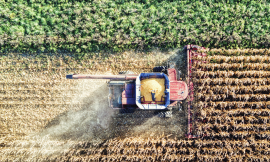
To get as much production out of the land as possible, we push ourselves to produce more than one crop each season, planting and harvesting our fields twice or even three times per year.
And to control pests, which are a constant menace, we use biological agents when and where we can. Although we also rely on traditional crop-protection products, we are always looking for new ways to defeat bugs and weeds.

I see many people today defending an extremely limited concept of environmental sustainability. They think it is all about greenhouse gas emissions. They call for “zero-carbon” farming.
Carbon is essential to the life cycle. We can not grow food without carbon. It is more appropriate to speak of “low-carbon” farming.
This kind of misunderstanding can lead to disaster when political leaders buy into a narrow vision of sustainability that twists into a centralised and exclusionary model, where burdensome “green” regulations become an instrument of political and economic control.
Nobody cares more about the environmental sustainability of my farm than I do. I have a greater stake in my farm’s soil health and water quality than anybody. I care about it so that we can produce healthy food today and so that my children and grandchildren will produce healthy food after I am gone.
This drives me to innovate, discover new ideas and transfer knowledge with other farmers.
That’s why regenerative agriculture is also about economic sustainability. Our farm sustains our family in the most basic ways. This is how we make a living—and we need the freedom to choose the technologies and methods that will help us meet the demands of consumers in a competitive marketplace.
When we succeed at this, rural economies flourish. We may not have big factories or office buildings, but we produce the food that everyone needs. I like to think that we are so good at it, people in cities don’t have to worry about the food supply. It will always be there.
I also ask that nobody take farmers for granted. Imagine what would happen if we ran out of food.
This leads to the final form of sustainability that farmers produce: political stability. Food is a pacifying element. It keeps us safe and secure.
Yet about 80 per cent of the world’s population lives in countries that are net importers of food. Agriculture is international like never before. We depend on the trade that moves food around the planet. And we depend on regenerative farmers who work in the present and think about the future.
If I do my job well, and do it sustainably, someone somewhere in the world will enjoy a meal today—and someone else will enjoy one tomorrow.
This piece was initially published by Global Farmer Network and has been revised to suit Farming First’s editorial guidelines.
Header photo credits: Global Farmer Network