
Small-scale farmers in remote areas often find it challenging to access agricultural inputs. At the same time, global agriculture is advancing through modern technologies and digital platforms. These transformations are improving the availability of inputs and helping farmers plan their activities with a better understanding.
Additionally, farmers can now use advisory tools and digital payment systems more efficiently to order products from their trusted sources. Digital agriculture is reshaping opportunities for small-scale farmers and how it will help them make smarter decisions in agriculture.
Barriers in traditional input supply
Many small and marginal farmers often face hidden barriers when obtaining seeds, fertilisers and equipment from local stores. They purchase from traditional supply chains like local agricultural shops and wholesalers and deal with economic, institutional and informational limitations.
Farmers in villages buy agricultural inputs in small quantities rather than in bulk. This eventually leads to them losing the power of bargaining, which increases the overall cost of the products. Moreover, some traditional distribution chains sell fake farming supplies with no dosage or brand information, creating an information gap and leading to crop failure.
How digital agriculture is changing the way small farmers get agriculture input
Digital agriculture includes online payments, digital platforms and marketplaces and other tools that make farming faster and more accessible. Here is how digital agriculture transforms input access for small farmers:
- The online agri marketplace connects farmers with multiple brands and certified suppliers offering a wide range of quality agricultural inputs.
- Digital tools allow farmers to check information on the usage and application methods of the inputs.
- Unlike traditional input supply, digital agriculture offers farmers a wide range of packet sizes from small to large.
- With the help of digital input platforms, farmers can search for products and information from home and receive doorstep delivery, saving time and travel costs.
Smarter decisions through digital agriculture advisory tools
Digital agricultural tools like artificial intelligence (AI) and farming apps give detailed information on weather, soil and crop conditions. They also guide them in sowing seeds, irrigation and fertiliser application. The tools also suggest brief information on the timing of specific crop inputs.
Farmers can also get support from agronomists and built-in chatbots to receive advice related to soil, crop, and input choices. These advisory tools allow farmers to make smart farming decisions in activities like irrigation, fertiliser application and harvesting.
Financial access through digital payment and micro-credit
Digital payments are solving financial challenges and making payments quicker and easier. Due to modern technology like UPI and QR codes, small farmers do not need to carry cash, and payment can be done on the spot with a digital record.
A clear payment history improves transparency and may help in accessing bigger loans in the future. Some agri apps also offer flexible instalment plans, helping them manage cash flow and long-term growth. Overall, microcredit provides financial freedom and enables farmers to purchase agricultural inputs at the right time and under the right conditions.
Precision farming technologies reducing agriculture input wastage
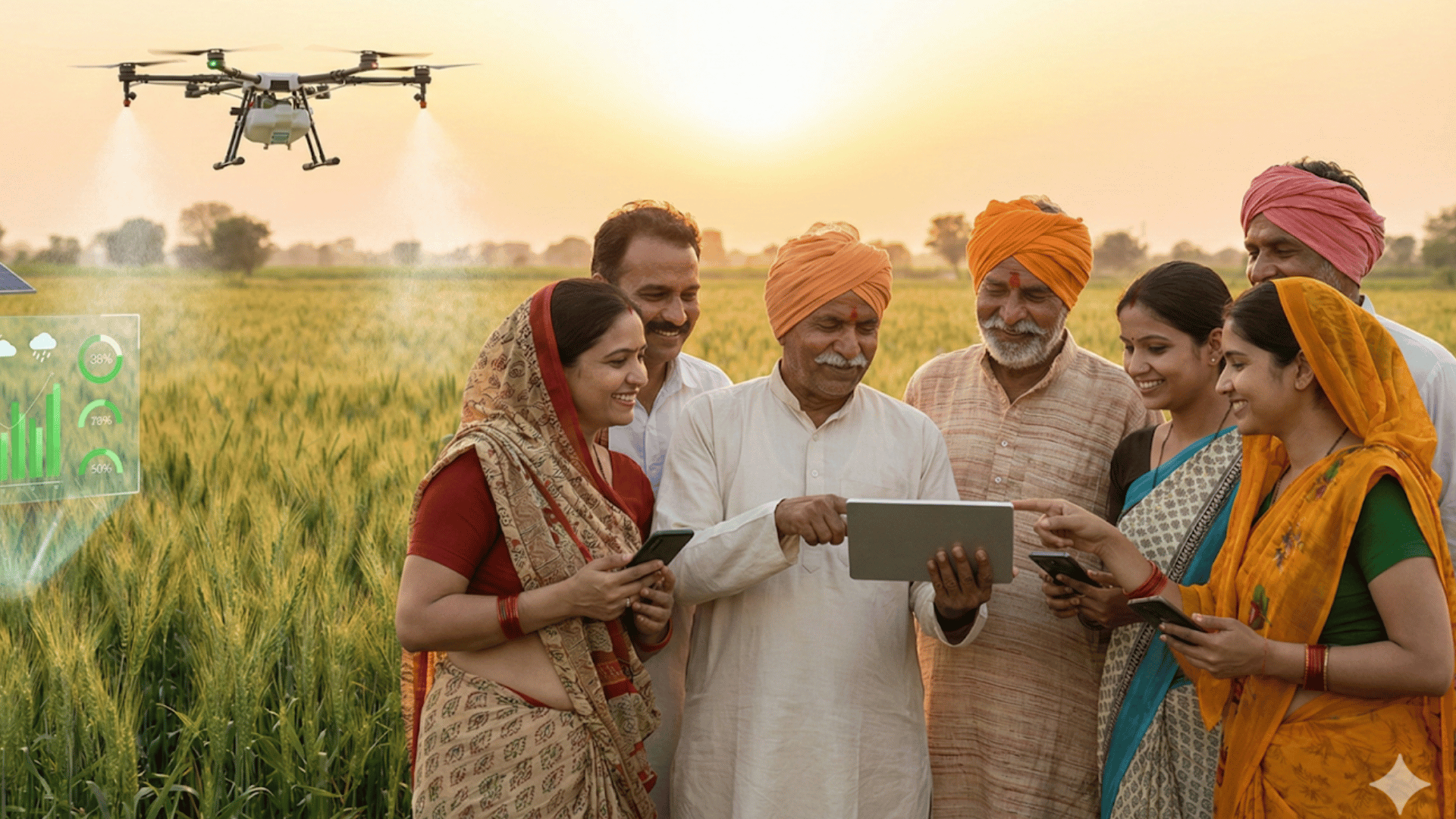
Smart farming uses the latest technologies, such as GPS, AI, sensors and drones, to monitor crop health, soil pH and nutrient levels. Based on this, farmers can determine how much agricultural input is required, preventing overapplication at the farm.
Some agricultural software platforms also recommend precise amounts of insecticides and fungicides to reduce input waste and costs. This encourages sustainable farming practices and reduces environmental impact.
Case examples and opportunities ahead
Farmers across India are adopting digital agriculture, which is contributing to more efficient farming practices. This case example illustrates the impact of smart farming and upcoming opportunities:
In Karnataka and Telangana, drone spraying programmes were conducted on paddy fields. This drone technology saved labour time and sprayed pesticides with greater precision.
As per research, more than 70 per cent of Indian farmers may access the digital platforms by 2030. The future of digital agriculture aims to increase crop productivity and create a sustainable farming system.
Digital agriculture is reshaping the way small farmers obtain agricultural inputs. Online platforms not only provide multiple options but also support clearer comparison of available products. This makes it easier for farmers to compare and select suitable inputs for their crops. Advisory tools give accurate dosage, while digital payment platforms offer financial relief. Digital agriculture is contributing to more efficient and convenient farming.