

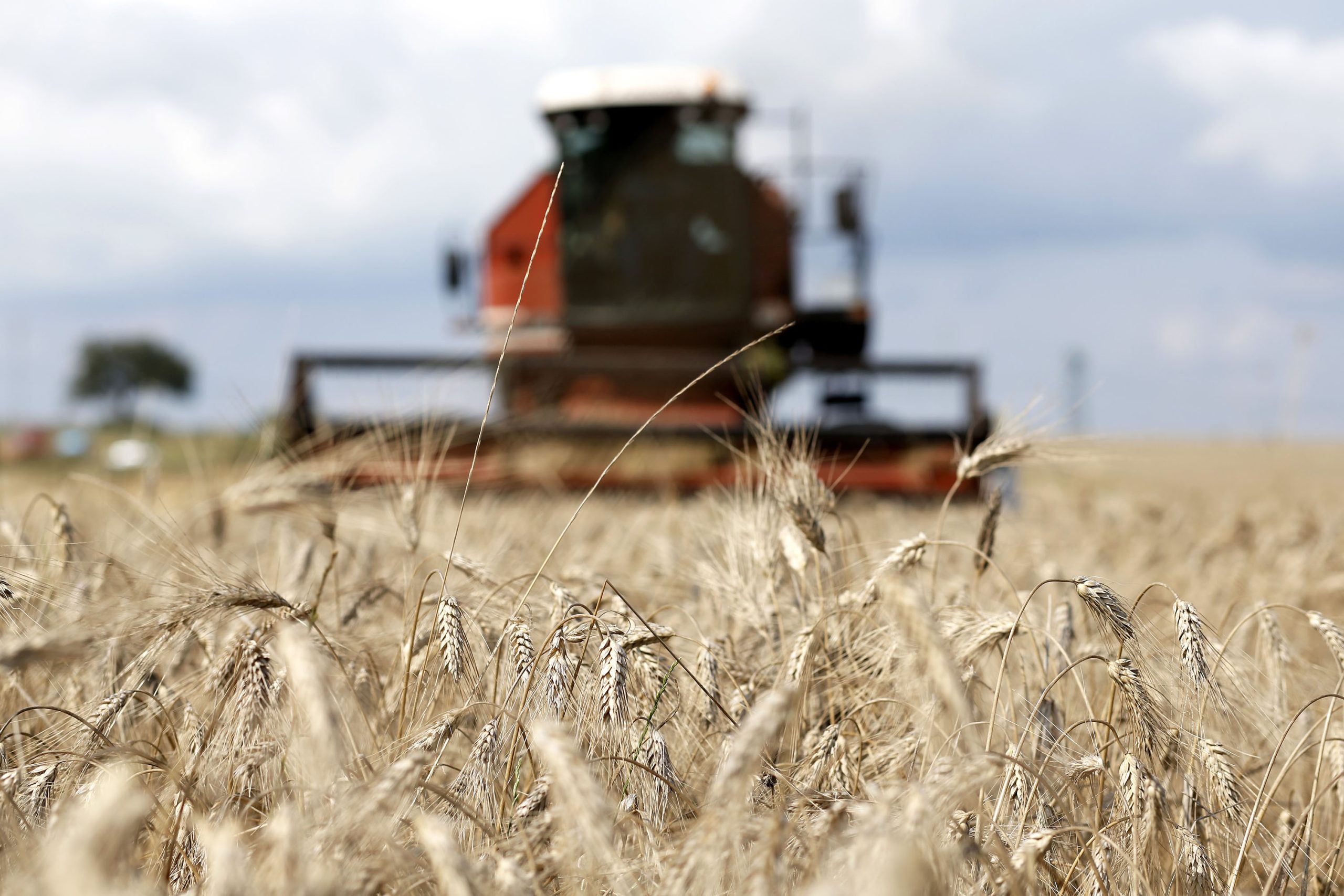
Agriculture is at a turning point, following the gathering of world leaders at the recently concluded COP30 and G20 summit. Farmers are being asked to meet rising global demand while also cutting emissions, protecting ecosystems and staying profitable—all at a moment when productivity growth is slowing in many regions. The 2025 Global Agricultural Productivity (GAP) report shines a light on why this slowdown matters and what can be done about it.
The numbers tell a clear story. Global total factor productivity (TFP) growth—the measure of how effectively land, labour, capital and other resources are turned into crops, livestock and aquaculture products—is increasing at just 0.76 per cent per year, about one third of the 2 per cent annual growth rate needed to meet global food, biofuel and industrial demand sustainably.
Meanwhile, demand for agricultural products is projected to rise by more than 1 per cent annually through 2031, driven largely by population and income growth. When productivity gains stall, the pressure shifts elsewhere. Farmers tend to expand into new lands or rely more heavily on inputs to keep production up—approaches that can raise costs, contribute to land degradation and increase greenhouse gas emissions.
In sub-Saharan Africa, for example, land expansion has grown by 2 per cent annually since 2014, and two-thirds of agricultural output growth in the region now comes from bringing new land into production rather than from efficiency improvements.
A growing productivity challenge
Agricultural systems everywhere are feeling the strain. Tightening resource limits, unpredictable weather, ecological degradation and years of underinvestment in agricultural research and development (R&D) have made it harder for farmers to improve productivity.

The United States illustrates this challenge. While TFP grew 1.5 per cent annually in the 1990s, it dropped to 0.19 per cent between 2014–2023, eroding U.S. competitiveness in the $1.5 trillion global agricultural trade market. Meanwhile, China has taken the opposite trajectory, averaging 1.9 per cent annual TFP growth, supported by public agricultural R&D investments that are now double those of the U.S.
The consequences extend from farm profitability to climate action. When input costs rise faster than productivity, farm margins shrink. When farmers must rely more on land expansion or input intensification to maintain output, emissions rise. And when productivity slows globally, food prices tend to increase—affecting consumers everywhere, especially in import-dependent countries.
The TFP growth frontier: a new way to understand plateauing productivity
To diagnose why productivity is stalling and how to revitalise it, the 2025 GAP ReportTM introduces the TFP Growth Frontier Model. This framework maps agricultural progress across four technological domains, each defined by the tools farmers use and the limits of what those tools can achieve:
- Extensification: expanding or transitioning land to boost output.
- Input intensification: using fertilisers, improved genetics, irrigation and mechanisation to raise yields.
- Efficiency optimisation: applying digital tools, precision agriculture and gene editing to make every input more effective.
- Systems integration: linking production with broader ecological and social systems for resilience, equity and environmental sustainability.

Countries operate along this frontier in different ways. Some, like the U.S., the Netherlands, and Israel, are “Frontier Leaders,” close to the limits of current technology. Others, including India, China, Brazil, and Vietnam, are “Fast Followers,” rapidly adopting proven tools.
“Potential Leapfroggers,” such as Rwanda or Costa Rica, can skip earlier stages by jumping directly into advanced digital or climate-smart systems. Many low-income countries remain “Developing Adopters,” where adoption gaps persist but opportunities for gains are immense.
Four evidence-based pathways forward
The GAP Report outlines four strategies that can help agricultural systems move beyond current plateaus.
Scale adoption through bundled solutions
Many technologies never reach farmers because they get trapped in the “Valley of Death” between invention and widespread use. The report stresses the need for bundled solutions—pairing tools with financing, extension services, infrastructure, and policy support. Adoption must fit local realities and work alongside technologies that farmers already use.
Push domain frontiers through R&D
The slowdown in U.S. productivity reflects years of underinvestment in agricultural research during the 1990s and 2000s, especially given the 30-year lag between R&D spending and productivity outcomes. Sustained public-private R&D can raise productivity limits by generating new tools, from advanced genetics to AI-driven crop management. Investments made today will shape productivity through the 2050s.

Facilitate transitions to next-stage domains
Shifts in climate, markets or biological limits often signal the need to move from one domain to the next. Countries can ease these transitions with clear regulatory pathways, strong digital infrastructure, modernised extension systems and functioning ecosystem services markets.
Enable leapfrogging where conditions allow
Agricultural development is not linear. With robust digital infrastructure and access to financing, countries can adopt advanced tools quickly. In parts of India, for example, rapid growth in mobile technology has enabled smallholders to access precision irrigation and drone-based crop monitoring without decades of transitional mechanisation.
The road ahead
Agricultural productivity growth is not just a technical issue—it’s a climate imperative, a food security priority and a cornerstone of rural prosperity. The policy choices made today will determine whether agriculture can meet rising demand while also reducing emissions, protecting natural resources and supporting thriving rural economies.
The path forward is clear, backed by evidence and actionable diagnostics: invest in innovation, accelerate adoption, modernise policy frameworks and strengthen cooperation. With deliberate action, the sector can unlock the next generation of productivity growth and help build a more resilient, sustainable future for farmers and consumers alike.
Header photo credits: ©FAO/Alessia Pierdomenico