
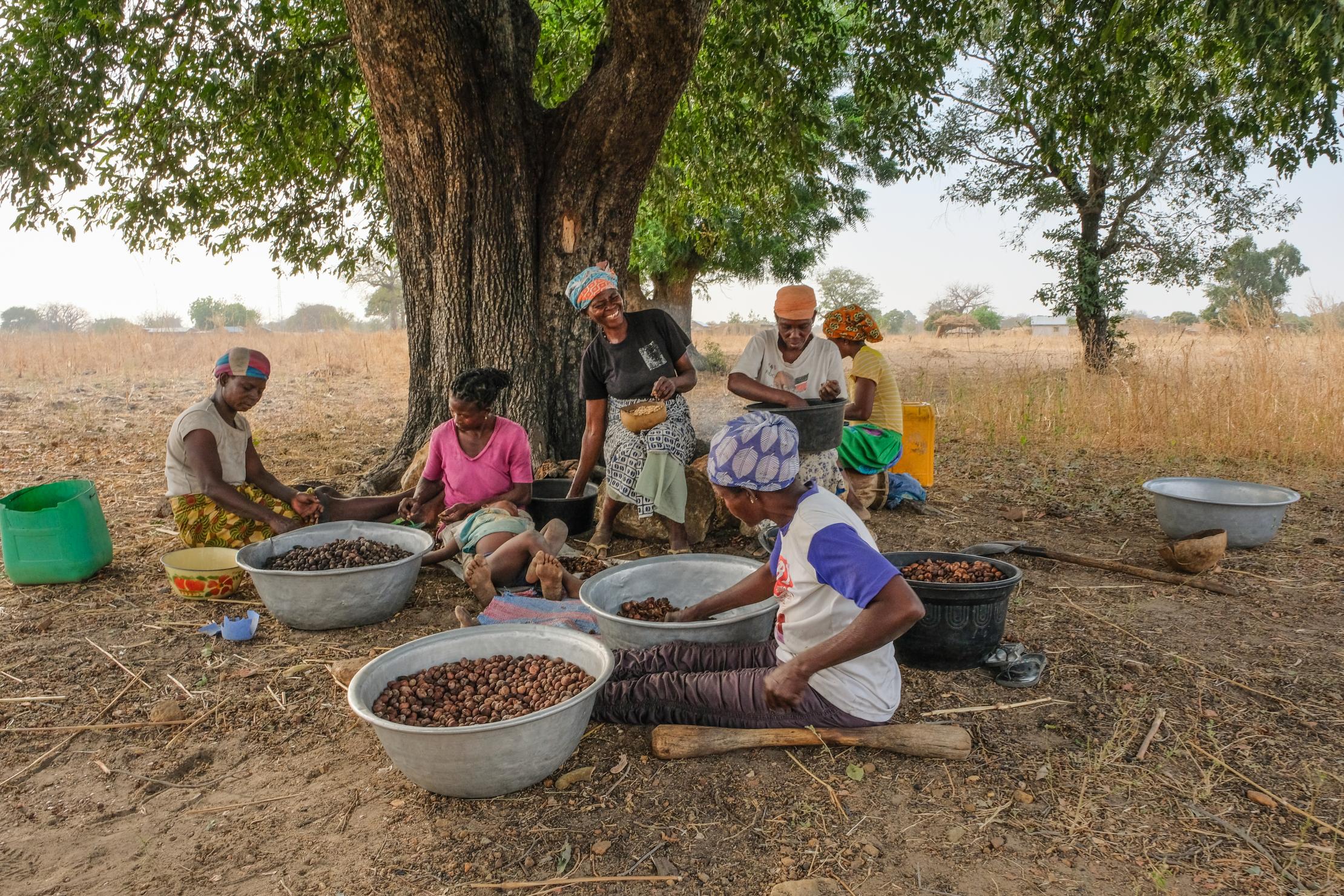
Long before bioeconomy became a topic in policy debates and research agendas, traditional communities were already practicing many of its principles, relying on biological resources for food, energy, medicine, and construction materials. Many traditional practices are still present today and are built around a deep, practical understanding of what nature can provide.
While not all traditional practices per se are sustainable or emphasise innovation, certain practices demonstrate both, thus offering valuable models for advancing a modern bioeconomy.
What makes the bioeconomy especially powerful – and complex – is its inherently local character. No two countries share the same bioeconomic profile: each has its own specific context, set of natural resources, practices and traditions that define how a bio-based development trajectory can and should take place. As such, the bioeconomy’s first access points should be locally-rooted, culturally-sensitive and inclusive of traditional systems of knowledge and innovation.
Driven by science
Today’s bioeconomy is largely driven by science. In the African context, where many countries are still at the early stages of developing their bioeconomy, there is an opportunity to integrate modern science with traditional knowledge. This would not only enrich the diversity of bioeconomic approaches but would also encourage co-creation and ownership by rural communities.
Often, rural communities have little access to processing, packaging and marketing facilities, and their use or trade of traditional knowledge products thus very largely remains in the informal economy. To develop, scale and mainstream bioeconomic products, science and science infrastructure are often of vital importance. A clear and nimble government strategy is crucial for guiding and accelerating this process.

Instead of replacing traditional knowledge, therefore, modern science and technology must elevate it, complement and learn from it. This can mean scaling tested practices, improving the safety and efficiency of local production methods, or using modern research to discover new uses for local plants and materials that are sustainable.
This holds enormous potential for innovation in product design, processes, and business models. For example, in the energy sector, farmers have long known the value of animal waste for fuel. Today, that knowledge underpins modern biogas digesters, turning livestock waste into clean cooking gas and electricity for rural energy access, such as the Kenya Biogas Program and the National Biogas Program of Ethiopia.
There can be tensions between the worldviews of science and traditional knowledge. The basis of science lies in systematic observation, empirical evidence and the assumption that natural phenomena have natural causes that can be understood through consistent investigation.
Traditional knowledge has certain similar aspects, but also a more complex foundation, including lived experience, cultural transmission, close interaction with nature, community practices and spiritual beliefs. Where present, such tensions need to be managed carefully to ensure productive and constructive partnerships.

The development of bioeconomy clusters could serve as regionally anchored hubs that integrate biomass production, processing, science and innovation, traditional knowledge and market access. Centred around locally available resources, bioeconomy clusters would connect farmers, fishing communities, agroindustries, research institutions and investors through coordinated value chains.
Infrastructure and logistics systems would be supported by R&D, technical training and capacity-building. In South Africa, a dedicated model has been developed to support the mainstreaming of indigenous knowledge-based products. It empowers knowledgeholders with direct control over the development and commercialisation of their knowledge. Science plays a supportive role, not only contributing to the refinement and validation of products but also facilitating integration into commercial value chains.
The need for bioeconomy strategies
As the bioeconomy sector grows, it will crowd in investment, innovation and market opportunities, but it will also raise critical questions around ownership, regulation, equity and sustainability. Clear, forward-looking bioeconomy strategies will be essential to integrate traditional knowledge with science, promoting inclusive business development and sustainable economic growth.
An enabling environment must drive this process, to:
- Prevent exploitation and misappropriation of local knowledge and resources.
- Promote benefit-sharing and ethical collaboration.
- Empower local communities to be co-creators of bio-based innovations.
- Build capacity at the community level to engage meaningfully in emerging bioeconomy value chains.
- Encourage scientists to better integrate traditional knowledge in their research.
The promise of the bioeconomy lies not just in green economic growth but in the possibility of a new development model that is regenerative, inclusive and rooted in local realities. The G20’s bioeconomy principles rightly emphasise traditional knowledge as an integral form with a vital role in sustainable development and ensuring that communities equitably benefit from its application.
For African countries, the path forward does not require choosing between tradition and innovation. Instead, it calls for leveraging the strengths of both to create solutions that are environmentally sound, socially just and economically viable. By honouring traditional knowledge systems while embracing modern science, Africa can shape a bioeconomy that reflects its diverse heritage and secures a sustainable and resilient future.